Found a baby owl in your yard? Here's what Florida wildlife officials say to do
Most young birds on the ground aren't orphans, state and federal wildlife agencies say. Here's how to tell when one needs help, who to call in Brevard, and why you shouldn't take it home.
Written with AI assistance, with sources linked below.
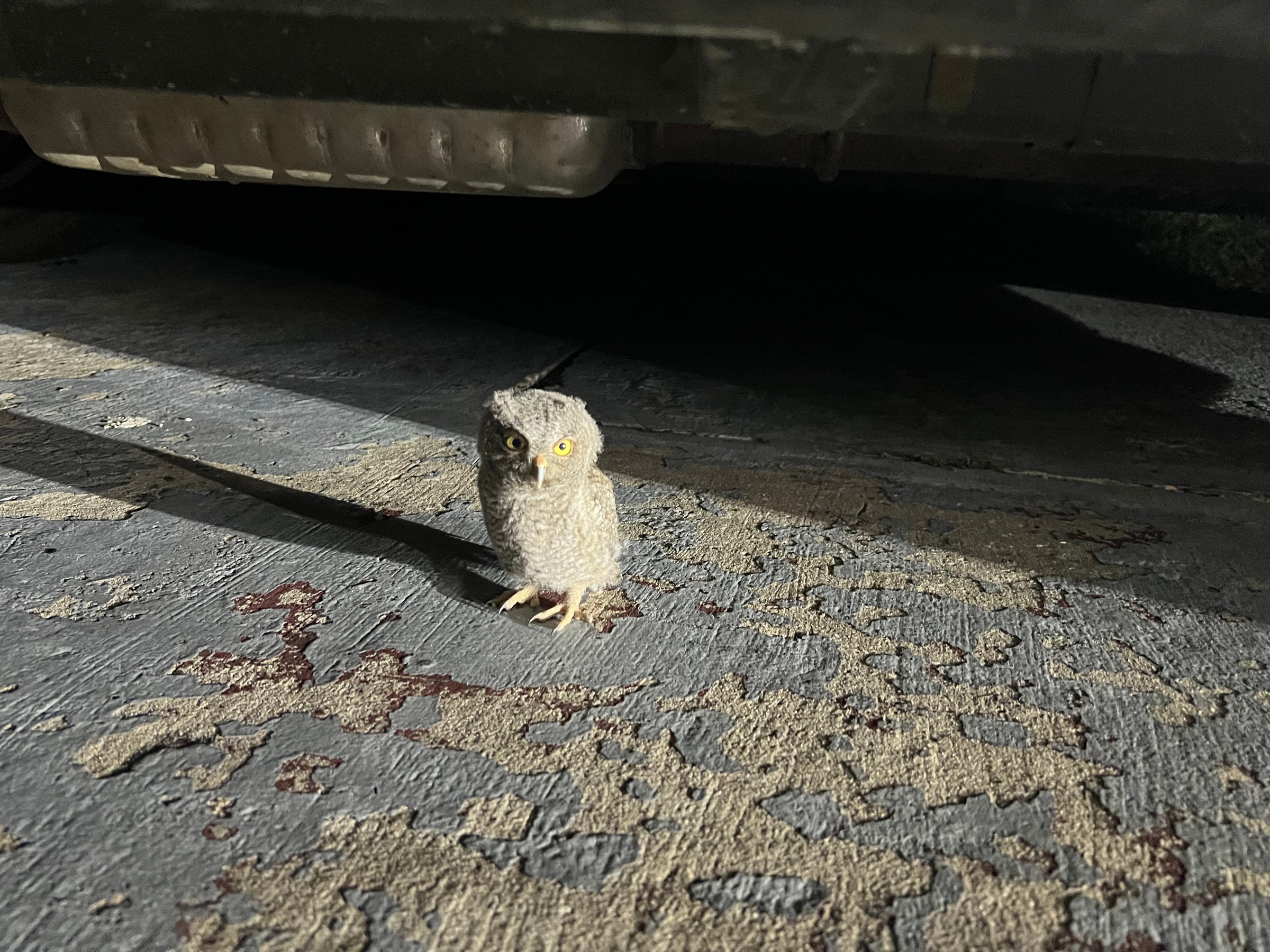
Finding a fuzzy, wide-eyed owlet on a driveway or under a tree can make you want to scoop it up. State and federal wildlife officials say that, most of the time, the best thing to do is leave it alone.
Most babies aren't orphans
The Florida Fish and Wildlife Conservation Commission says young wild animals are rarely orphaned. A parent may be out finding food or keeping watch from nearby. The agency asks people not to pick up baby animals or move them out of their surroundings.
The U.S. Fish and Wildlife Service gives a quick way to size up a baby bird:
- Nestlings are featherless or still have their eyes closed and aren't ready to leave the nest. If you can find the nest, put the bird back in it. Your scent won't scare off the parents. If you can't find the nest, leave the bird where it is or move it into the shade.
- Fledglings have more developed feathers and can hop and flutter. They've outgrown the nest and are learning to fly, and their parents are still nearby taking care of them. Give them room.
When it does need help
The federal agency says an animal needs help if it has an obviously broken limb, is bleeding or shivering, or there's a dead parent nearby. In that case, FWC says to note exactly where you found it and call a licensed wildlife rehabilitator. Call before you drive an animal anywhere.
In Brevard, FWC's list of licensed rehabilitators includes the Florida Wildlife Hospital and Sanctuary in Melbourne, which is permitted for birds including birds of prey. The hospital is at 4560 N. U.S. Highway 1 and can be reached at (321) 254-8843. Its website lists hours of 9 a.m. to 4:30 p.m., with after-hours drop-off. The state list has other permitted rehabilitators in Brevard as well.
If you can't reach a rehabilitator, FWC says to contact its regional office during business hours. After hours, the agency's Wildlife Alert Hotline is 888-404-3922, though FWC says it gives priority to certain species.
Don't keep it
Under Florida law, you can only hold a sick, injured or orphaned wild animal long enough to get it to a licensed rehabilitator, FWC says. Any care beyond that requires a state permit. Most birds also need federal permits to rehabilitate, according to the U.S. Fish and Wildlife Service. FWC's "Living with Raptors" guide notes that all of Florida's birds of prey, owls included, are protected under federal and state law, along with their nests and eggs.
Meet the eastern screech-owl
The owlet pictured here is an eastern screech-owl. FWC's species profile describes it as one of Florida's smaller owls, about the size of a robin, with ear-like feather tufts. Adults come in rust-red, slate-gray and, less often, brown.
- Where they live: wooded areas, suburban parks and yards with trees. They nest in tree cavities, nest boxes and sometimes the soffits of run-down buildings, but they don't make their own cavities.
- Family life: Eggs hatch after about 26 to 34 days, and the young are ready to fly roughly 26 to 30 days after that.
- What you'll hear: not a hoot. Screech-owls call with eerie whinnies and trills.
- What they eat: insects, earthworms, crayfish and small amphibians, reptiles and mammals. FWC says that makes them natural pest control.
FWC says screech-owls will readily move into nest boxes if you'd like to invite some to your yard.
Sources
- FWC: Injured and Orphaned Wildlife myfwc.com/conservation/you-conserve/wildlife/injured-orphaned/
- FWC: Eastern Screech-Owl species profile myfwc.com/wildlifehabitats/profiles/birds/owls/eastern-screech-owl/
- FWC: Living with Raptors (PDF) myfwc.com/media/21806/living-with-raptors.pdf
- FWC: Permitted Florida Wildlife Rehabilitators (PDF) myfwc.com/media/i0efjuil/licensedwildliferehabilitatorsbyregion.pdf
- U.S. Fish and Wildlife Service: What to do if you find a baby bird, injured or orphaned wildlife www.fws.gov/story/what-do-if-you-find-baby-bird-injured-or-orphaned-wildlife
- Florida Wildlife Hospital and Sanctuary: Contact floridawildlifehospital.org/contact-us/
Spot something wrong? Request a correction · Our standards