Orange-headed lizards and roaming peacocks: what to know about two non-native neighbors in Brevard
State wildlife officials and UF/IFAS explain where Peters's rock agamas and feral peafowl came from, whether they cause harm, and what homeowners can legally do.
Written with AI assistance, with sources linked below.
Some of the most eye-catching animals around Brevard don't come from here at all. Here's what state wildlife officials and University of Florida researchers say about two you may have spotted: a lizard with a bright orange head and the peacocks that wander some neighborhoods.
Peters's rock agama
What it is. Peters's rock agama (Agama picticauda) comes from sub-Saharan Africa, according to the Florida Fish and Wildlife Conservation Commission. It was first recorded in Florida in 1976 after pets escaped or were released, and it's now established in a number of counties across southern and central Florida.
For years, Florida's population was thought to be the red-headed agama, a related species. A DNA study by a UF graduate student later showed they were a different species, according to UF/IFAS Extension.
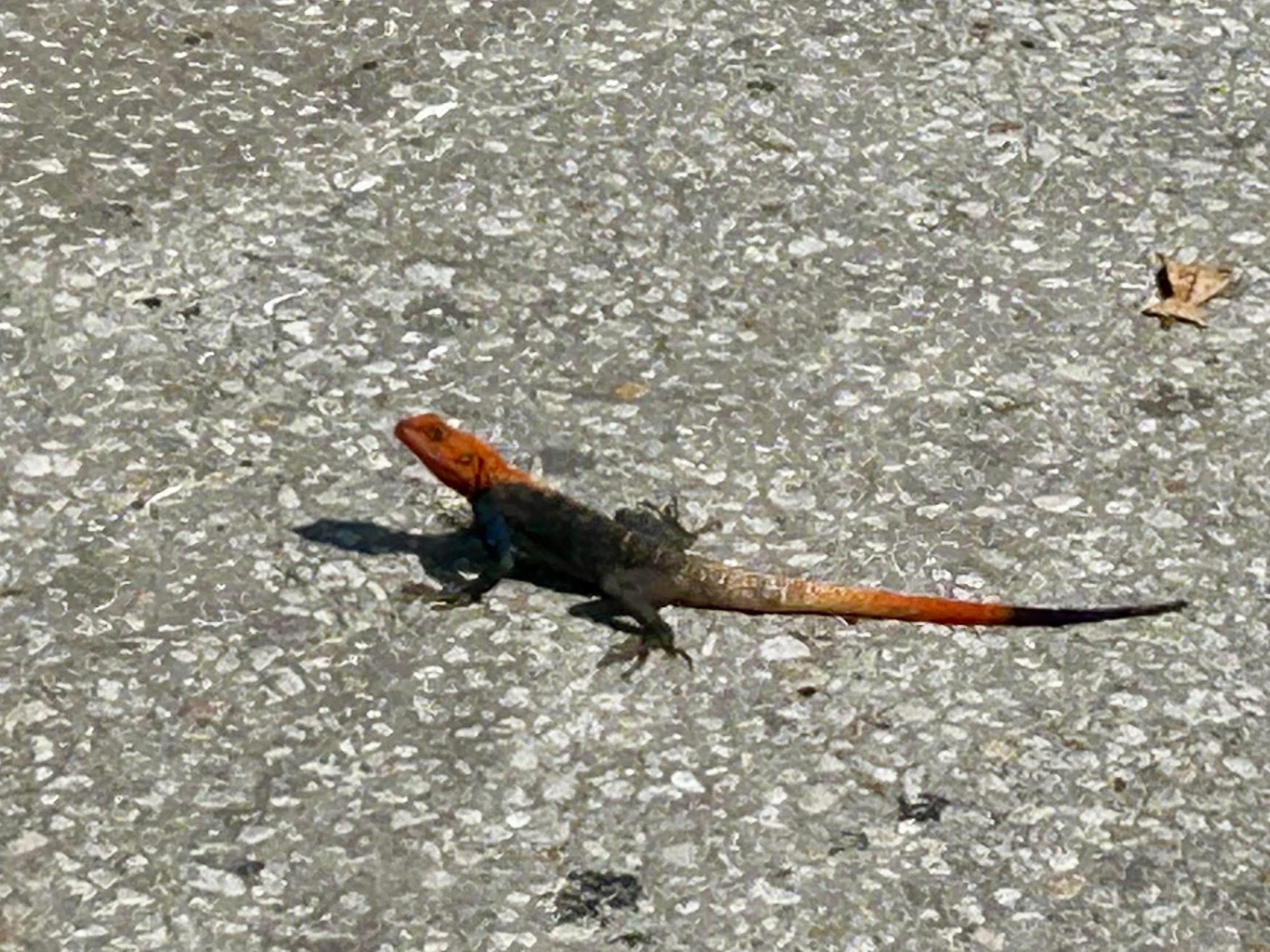
How to spot one. Breeding males are hard to miss. They have an orange or red head and an indigo-blue or black body, and the tail starts bluish white, turns orange in the middle and ends in a black tip. Adult males grow to about 8 to 12 inches, and females reach about 4 to 5 inches, FWC says. UF/IFAS says they mostly stick to buildings and developed areas, such as walls, fences, sidewalks, curbs and pavement, and they can catch rides on cars to new places.
Do they cause harm? They eat mainly ants, grasshoppers, crickets, beetles and other insects, and they've been seen eating smaller animals too. FWC says they could threaten small native insects and reptiles and that wiping out established populations probably isn't possible. UF/IFAS says the agama doesn't currently meet the definition of an invasive species, but it hasn't been studied enough to rule that out. The lizards don't threaten people or pets, though a big one could give a painful bite if you handle it.
Females lay clutches of about seven to nine eggs from April through August, and a female may lay two or three clutches a year, UF/IFAS says.
What you can do. UF/IFAS asks people to report sightings through EDDMapS, especially in places where agamas haven't been recorded before. FWC says it doesn't need more reports from counties where they're already established. Releasing any nonnative animal is against state law. FWC's Exotic Pet Amnesty Program will take unwanted pets.
Peafowl
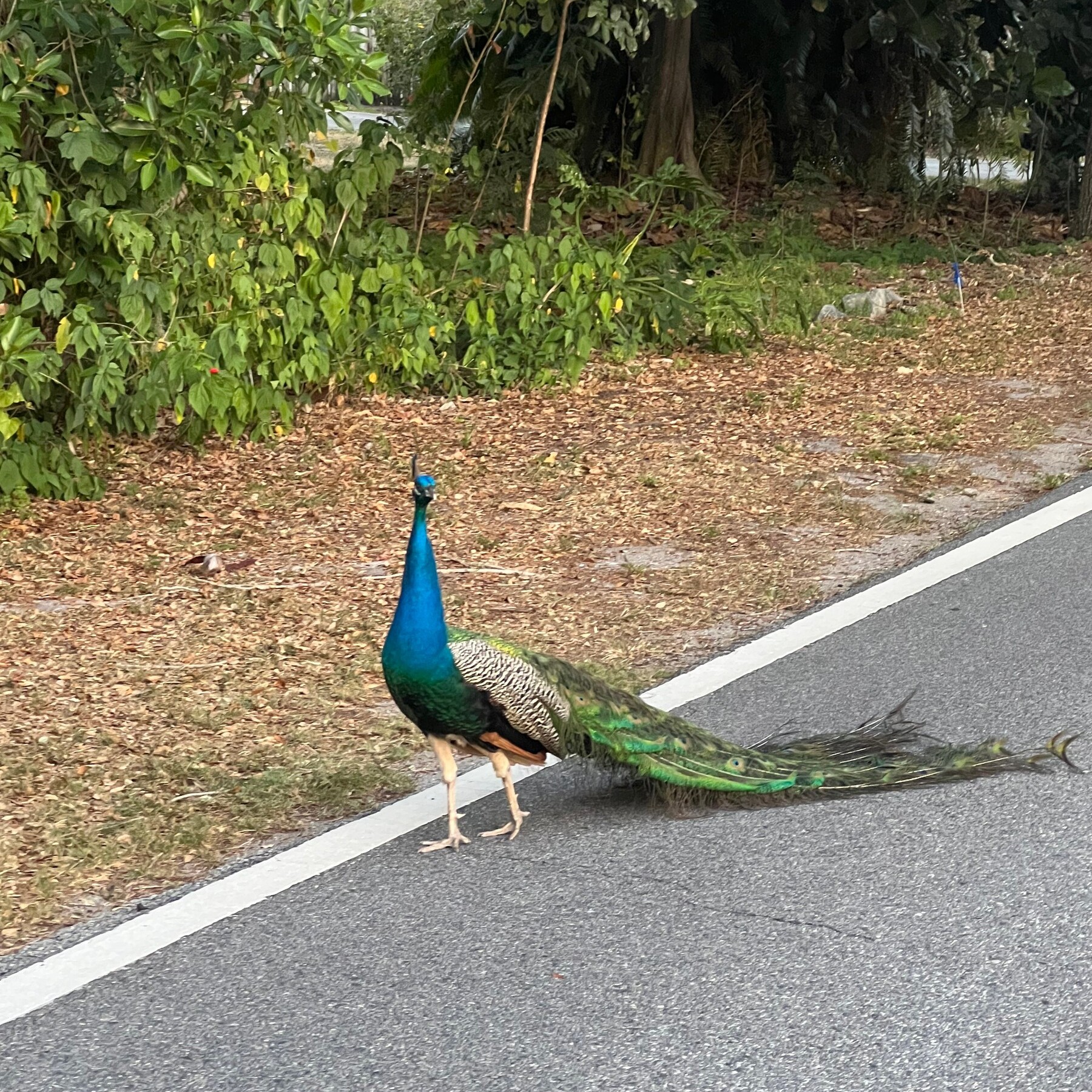
Peacocks and peahens are domestic birds, not native wildlife. FWC says peafowl, along with chickens and guinea fowl, have settled into communities across Florida after escaping or being released. They can become a nuisance as their numbers grow, especially when people feed them.
Who decides what happens to them. FWC says private landowners and homeowners associations don't need the agency's permission to remove peafowl from their property. Counties, cities and towns set the rules on keeping or removing them. FWC suggests calling your county animal services provider or local law enforcement to find out what's allowed where you live.
Keeping them out of your yard. FWC's tips:
- Put away anything that draws them, such as pet food, garbage, bird seed and fallen fruit.
- Scare them off with noise or a spray from the hose, without hurting them.
- Set up motion-activated sprinklers or alarms.
- Put bird spikes on fences or branches where they perch.
- Trim branches they roost on and thin out dense brush where they shelter or nest.
- If a bird keeps pecking at a window, it's reacting to its reflection. Cover the glass or rub soap on it. A car cover can protect a vehicle.
FWC also reminds residents that it's illegal to release nonnative animals in Florida.
Photos 1
Tap a photo to enlarge it.
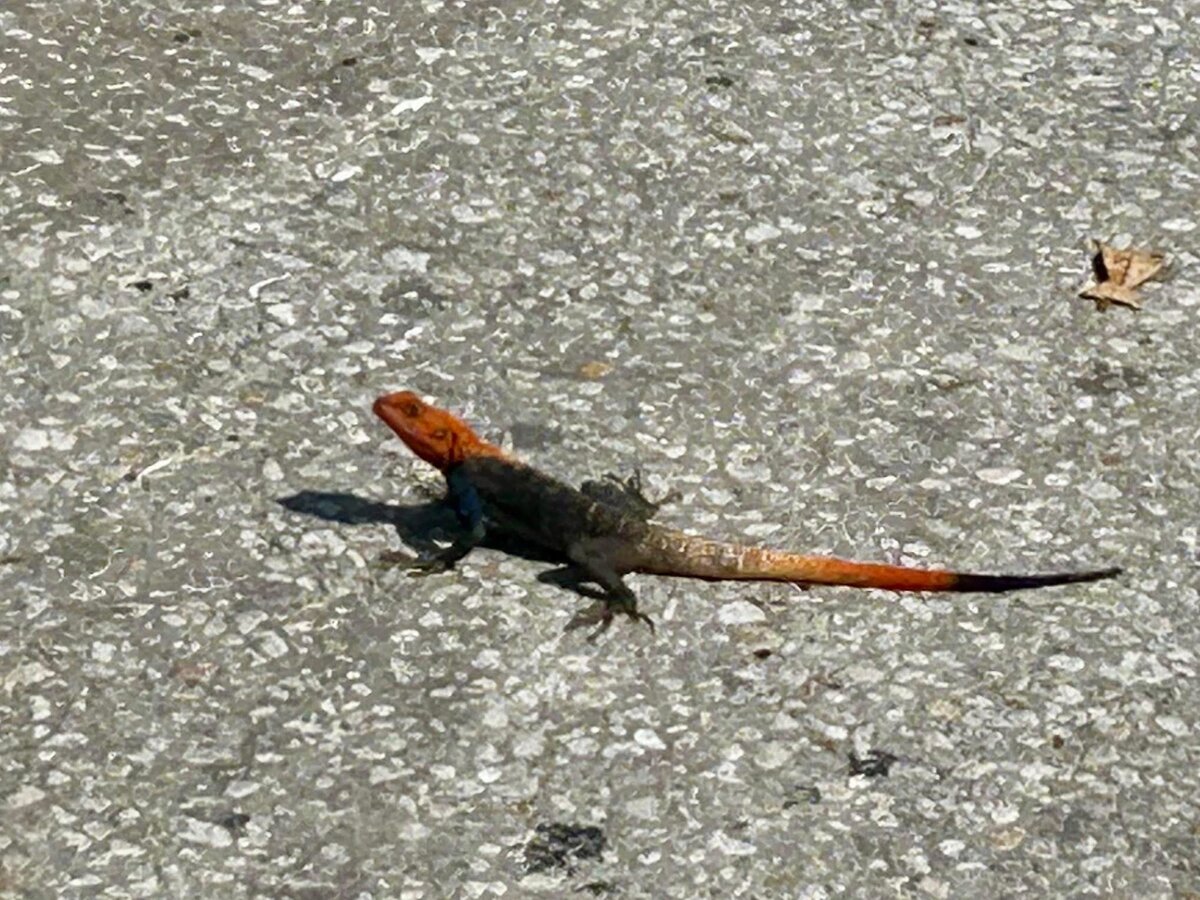
File photo: A Peters's rock agama, a non-native lizard, basks on pavement in Brevard in April 2025.
Photo: Space Coast Wire Affiliate
Sources
- FWC: Peters's Rock Agama myfwc.com/wildlifehabitats/profiles/reptiles/lizards/peters-rock-agama/
- UF/IFAS EDIS: Peters's Rock Agama in Florida (WEC431/UW476) edis.ifas.ufl.edu/publication/uw476
- FWC: Domestic Fowl myfwc.com/wildlifehabitats/nonnatives/domestic-fowl/
- FWC: Exotic Pet Amnesty Program myfwc.com/wildlifehabitats/nonnatives/amnesty-program/
- EDDMapS www.eddmaps.org/
Spot something wrong? Request a correction · Our standards