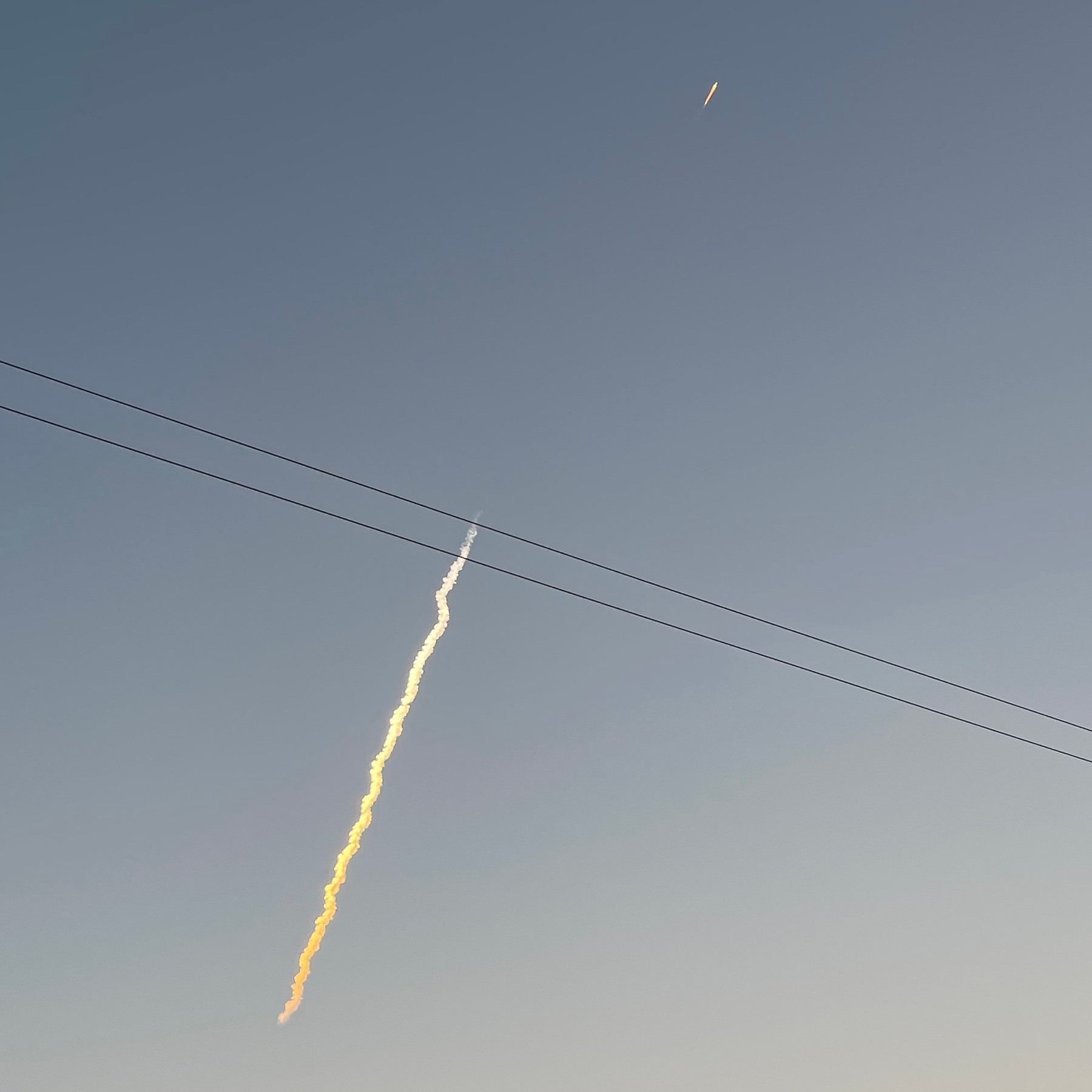
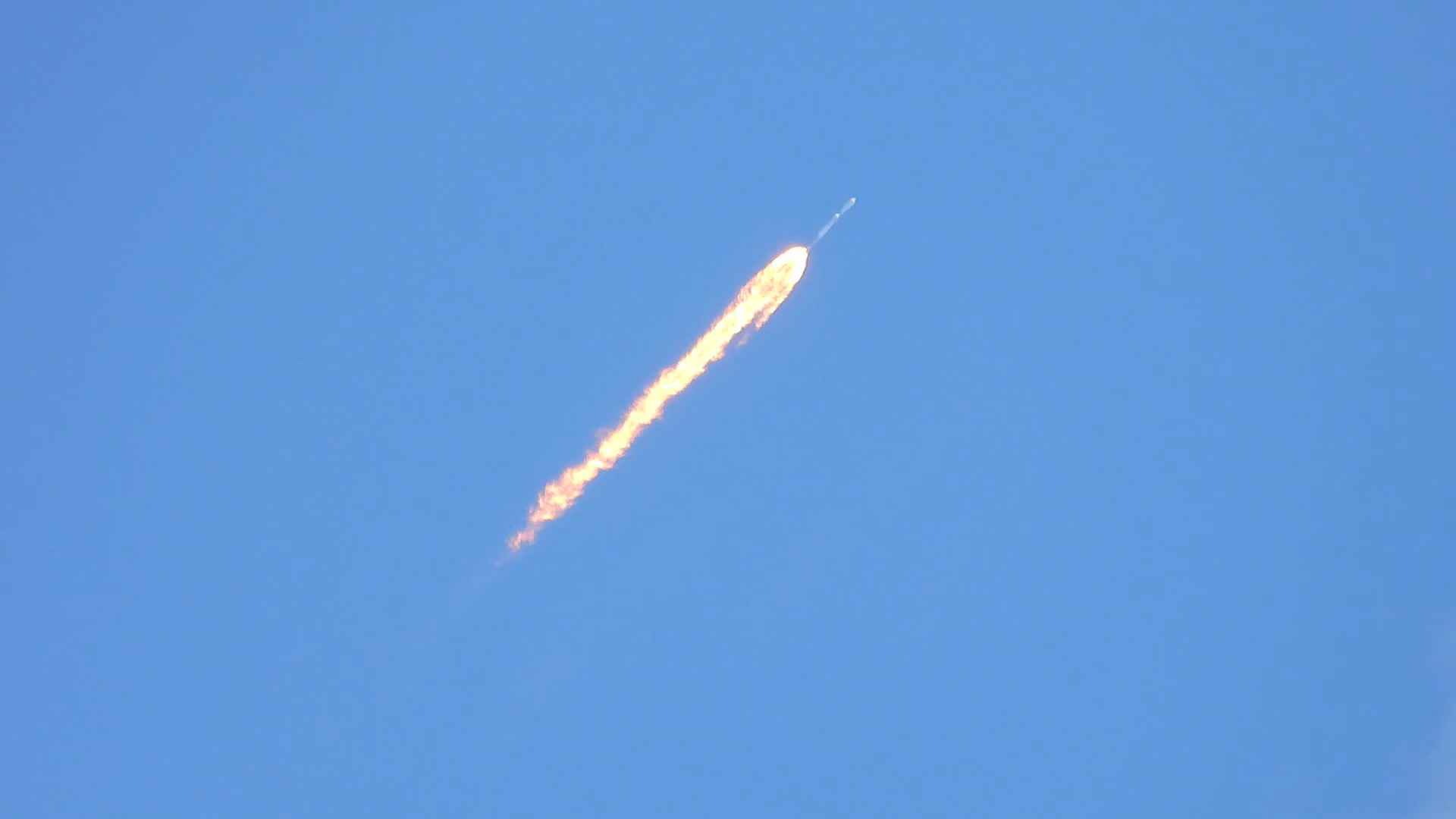
SpaceX catches Starship at Starbase for the first time. Here's how the rocket is coming to the Space Coast
SpaceX caught its Starship upper stage with the launch tower at Starbase, Texas, on Saturday, about 22.5 hours after Friday's launch. The Super Heavy booster had diverted to a splashdown in the Gulf.
Written with AI assistance, with sources linked below.

Confirmed by: SpaceX on X: Mechazilla catches Starship, Nov. 14, 2026, 4:21 p.m. EST, SpaceX on X: Teams have polled go to return Starship to the launch site, Nov. 14, 2026, 2:18 p.m. EST, SpaceX on X: catch planned ~22.5 hours after launch, Nov. 14, 2026, SpaceX Starship Flight 15 mission page, Spaceflight Now, Nov. 13-14, 2026, Space.com live updates, Nov. 14, 2026
Updates
- Updated with SpaceX's confirmation at 4:21 p.m. EST that the tower caught Starship at Starbase. Headline changed from the earlier preview of the catch attempt.
SpaceX caught its Starship upper stage with the launch tower arms at Starbase, Texas, on Saturday afternoon, the first time the company has caught the ship after an orbital flight. "Mechazilla catches Starship!" the company posted on X at 4:21 p.m. EST, a few minutes after it said the ship was on final approach for the catch. Earlier, at 2:18 p.m. EST, SpaceX said teams had polled go to return Starship to the launch site, and it reported a good deorbit burn at 3:25 p.m. EST.
SpaceX said early Saturday that Starship and its heat shield were healthy and that teams planned a return-to-launch-site catch at Starbase about 22.5 hours after launch. Spaceflight Now and Space.com put Friday's liftoff at 5:47 p.m. EST, which would put the catch attempt around 4:17 p.m. EST Saturday. SpaceX's Flight 15 timeline, which lists all times as approximate, puts the landing burn shutdown and catch at 22 hours, 32 minutes and 34 seconds after liftoff, or about 4:19 p.m. EST. The company has said the schedule can change.
In a webcast update quoted by Space.com, SpaceX's Kate Tice said the launch team had just finished the final planned contingency check and that all teams had polled go, including the ship, heat shield, flaps, structures, aero, guidance, navigation and control, and the tower. Earlier Saturday, SpaceX said on X that Starship was "still looking good for return to launch site today" and that "Pad and tower systems are go for catch." SpaceX has said the ship will attempt the return only if the systems needed for reentry, the landing burn and the tower approach stay healthy.
Where to watch the coverage
SpaceX carried the official webcast on its Flight 15 mission page and on X at @SpaceX. Spaceflight Now also covered the flight.
What Flight 15 has done so far
Starship Flight 15 lifted off from Pad 2 at Starbase on Friday, Nov. 13. SpaceX posted "Liftoff of Starship!" at 5:48 p.m. EST. Spaceflight Now and Space.com reported liftoff at 5:47 p.m. EST, or 4:47 p.m. in Texas.
The flight was planned as the first attempt to catch both the Super Heavy booster and the Starship upper stage back at the launch site. After hot-staging, SpaceX said the Super Heavy booster was boosting back toward Starbase for a catch. Minutes later, the company said, "Super Heavy has diverted to an offshore splashdown in the Gulf." SpaceX later posted video it described as the landing burn and splashdown for Super Heavy Booster 22.
SpaceX commentator Dan Huot said on the company webcast that the booster's guidance, navigation and control system triggered an automated abort after it detected the booster was not in the right place to proceed with a catch, and that the booster then headed to the offshore splashdown, according to Spaceflight Now and Space.com. Huot said the team is still looking into how the booster got out of position, those outlets reported. Spaceflight Now and Space.com reported the booster exploded over the water or shortly before impact. SpaceX said Saturday that recovery teams were immediately on site after the splashdown and that its environmental health and safety team is working to recover any debris that washes onshore.
The booster on this flight, Super Heavy Booster 22, was the first Version 3 booster SpaceX tried to catch. The company's mission page says three earlier Version 1 boosters were caught successfully, and two of those later flew again.
The Starship upper stage, which SpaceX identified as Ship 42 before the flight, continued on. SpaceX said "Go for orbit!" and later that the ship performed its orbital insertion burn and entered orbit of Earth for the second time, aiming for an orbit of about 275 kilometers (about 171 miles). The company then said payload deploy was complete and that all 26 Starlink V3 satellites were in orbit. After that, SpaceX said the ship was in a long coast around Earth, with early deorbit options available if needed, and that all systems were looking good.
If today's catch works, it would be the first time SpaceX has caught a Starship upper stage at the tower. Because the booster already diverted to the Gulf, this flight will not be a full recovery of both stages, even if the ship is caught. That catch has not happened yet.
How Starship is coming to the Space Coast
Friday's flight was from Texas, but SpaceX has been preparing Kennedy Space Center and Cape Canaveral Space Force Station as future Starship launch sites.
At Kennedy, the first Florida pad is Launch Complex 39A, the historic pad SpaceX already leases and uses for Falcon 9 and Falcon Heavy. In late October, SpaceX vice president of launch Kiko Dontchev told a Cocoa Village audience that the Starship infrastructure at pad 39A is "effectively complete," Florida Today reported. Dontchev said the first Florida Starship flight is planned as a booster catch at the 39A tower, with the upper stage circling Earth about six times before trying to land at Starbase in Texas, according to the paper. Florida Today also reported that SpaceX officials were still targeting a first Florida Starship launch by the end of 2026. SpaceX itself has not published a Florida launch date. The Space Coast Wire previously reported those remarks, along with Dontchev's account of a pause in Florida Falcon 9 launches while the company gets pad 39A ready.
The FAA announced a final environmental impact statement and record of decision for Starship-Super Heavy at LC-39A in a Feb. 3, 2026, Federal Register notice. That review covers up to 44 Starship-Super Heavy launches a year from the pad, and up to 44 Super Heavy landings and 44 Starship landings a year, including landings back at 39A or in the ocean, plus construction of launch, landing and related infrastructure. On its project page, the FAA has been clear that finishing the environmental review does not by itself grant a launch license. SpaceX still has to meet the agency's safety, risk and financial responsibility requirements.
Near Roberts Road at Kennedy, SpaceX has been expanding the campus where it already processes Falcon hardware. Dontchev described Gigabay as a 380-foot-tall building there where Super Heavy boosters will be stacked and prepared, and said doors would soon be installed, according to Florida Today's October reporting. He said boosters and ships will be built in Texas, barged around the Florida peninsula to Port Canaveral and Kennedy's Turn Basin, taken to Gigabay, stood upright and moved to the pad. In an April 2024 Final Supplemental Environmental Assessment.pdf), NASA said SpaceX already leased 67 acres at Roberts Road and evaluated a proposal to lease 100 more acres immediately north of that site. The assessment said new facilities in the expansion area would not exceed 1.5 million square feet, and would not be taller than about 400 feet, and would support vehicle and payload processing, fabrication, storage, manufacturing, and shipping and receiving. NASA had issued a Finding of No Significant Impact in December 2018 for the original Roberts Road operations area.
A second Starship complex is planned at Space Launch Complex 37 at Cape Canaveral Space Force Station. On Nov. 20, 2025, the Department of the Air Force signed a record of decision allowing SpaceX to redevelop SLC-37, start construction and prelaunch work, and later conduct up to 76 launches and 152 landings a year. That decision says Starship cannot launch or land there until the FAA finishes a supplemental airspace analysis and the Air Force issues a revised decision. The FAA announced that supplemental review on Sept. 29, 2026, and said public comments were due by Oct. 14, 2026. The FAA also said that after the Air Force decision, SpaceX began building infrastructure at SLC-37, but that SpaceX still needs a modified FAA vehicle operator license before any commercial Starship launches or landings there.
Check SpaceX's Flight 15 mission page and @SpaceX for more on Flight 15.
Sources
- SpaceX on X: Mechazilla catches Starship, Nov. 14, 2026 x.com/SpaceX/status/2121715216597827756
- SpaceX on X: Teams have polled go to return Starship to the launch site, Nov. 14, 2026, 2:18 p.m. EST x.com/SpaceX/status/2121684113526858011
- SpaceX on X: Starship and heatshield healthy, catch planned ~22.5 hours after launch, Nov. 14, 2026, 12:44 a.m. EST x.com/SpaceX/status/2121479482582441991
Show all 29 sourcesShow fewer
- SpaceX on X: Starship looking good for return; pad and tower go for catch, Nov. 14, 2026, 10:41 a.m. EST x.com/SpaceX/status/2121629656868614213
- SpaceX: Starship Flight 15 mission page (timeline, catch at T+22:32:34, all times approximate) www.spacex.com/launches/starship-flight-15
- SpaceX on X: Liftoff of Starship!, Nov. 13, 2026, 5:48 p.m. EST x.com/SpaceX/status/2121374779680964991
- SpaceX on X: Hot-staging; Super Heavy boosting back toward Starbase for a catch, Nov. 13, 2026 x.com/SpaceX/status/2121375384793231499
- SpaceX on X: Super Heavy has diverted to an offshore splashdown in the Gulf, Nov. 13, 2026 x.com/SpaceX/status/2121376372576915909
- SpaceX on X: Landing burn and splashdown for Super Heavy Booster 22, Nov. 13, 2026 x.com/SpaceX/status/2121439746740170859
- SpaceX on X: Go for orbit, ~275 km, Nov. 13, 2026 x.com/SpaceX/status/2121380531640369470
- SpaceX on X: Starship performs orbital insertion burn and enters orbit, Nov. 13, 2026 x.com/SpaceX/status/2121381593768186362
- SpaceX on X: All 26 Starlink V3 satellites are in orbit, Nov. 13, 2026 x.com/SpaceX/status/2121394268652839309
- SpaceX on X: Starship in a long coast phase around Earth, Nov. 13, 2026 x.com/SpaceX/status/2121394839954874797
- SpaceX on X: Recovery teams on site after booster splashdown, Nov. 14, 2026, 10:42 a.m. EST x.com/SpaceX/status/2121629958036492590
- SpaceX on X: Ship 42 moves to the Starbase pad, Nov. 12, 2026, 7:56 p.m. EST x.com/SpaceX/status/2121044579470233638
- SpaceX on X: Super Heavy Booster 22 moved to the launch pad, Nov. 10, 2026, 1:21 p.m. EST x.com/SpaceX/status/2120220290219208884
- Spaceflight Now: Live coverage of Starship Flight 15, Nov. 13-14, 2026 spaceflightnow.com/2026/11/13/live-coverage-starship-flight-15-attempts-to-recover-full-vehicle-in-double-launch-pad-catch/
- Space.com live updates: Starship Flight 15, including Kate Tice go poll, Nov. 14, 2026 www.space.com/news/live/spacex-starship-flight-15-live-updates-nov-14-2026-starship-first-double-landing-attempt
- Space.com: SpaceX still investigating why Flight 15 booster aborted catch, Nov. 14, 2026 www.space.com/space-exploration/launches-spacecraft/spacex-says-starship-flight-15-booster-aborted-chopsticks-landing-catch-after-launch-due-to-guidance-issue-video
- Florida Today (Rick Neale): SpaceX tower to try to catch Starship booster after first Florida launch, Oct. 22, 2026 www.floridatoday.com/story/tech/science/space/2026/10/22/spacex-starship-rocket-upper-stage-to-launch-at-kennedy-space-center-florida-land-at-starbase-texas/92369782007/
- Florida Today (Eric Lagatta and Rick Neale): SpaceX pauses Florida rocket launches for 6 weeks, Oct. 27, 2026 www.floridatoday.com/story/tech/science/space/2026/10/27/spacex-falcon-9-rocket-launches-paused-florida-starship/92440625007/
- Florida Today (Brooke Edwards): SpaceX Starlink shift sends California past Florida in launches, Oct. 28, 2026 www.floridatoday.com/story/tech/science/space/2026/10/28/why-california-is-launching-more-rockets-than-florida-space-coast/92460154007/
- Space Coast Wire: Florida Today: SpaceX pausing Florida Falcon 9 launches for 6 weeks to prepare for Starship spacecoastwire.com/story/florida-today-spacex-pausing-florida-falcon-9-launches-six-weeks-starship
- Federal Register (FAA), Feb. 3, 2026: Final EIS and Record of Decision for Starship-Super Heavy at LC-39A www.federalregister.gov/documents/2026/02/03/2026-02108/notice-of-availability-of-the-final-environmental-impact-statement-and-record-of-decision-for-spacex
- FAA: SpaceX Starship-Super Heavy at Kennedy Space Center LC-39A project page www.faa.gov/space/stakeholder_engagement/spacex_starship_ksc
- Federal Register (Department of the Air Force), Dec. 18, 2025: Record of Decision for Starship-Super Heavy at Cape Canaveral Space Force Station, signed Nov. 20, 2025 www.federalregister.gov/documents/2025/12/18/2025-23314/notice-of-record-of-decision-for-the-environmental-impact-statement-for-spacex-starship-super-heavy
- Federal Register (FAA), Sept. 29, 2026: Notice of Intent to prepare a Supplemental EIS for Starship-Super Heavy operations at SLC-37 www.federalregister.gov/documents/2026/09/29/2026-19897/office-of-commercial-space-transportation-notice-of-intent-to-prepare-a-supplemental-environmental
- FAA: SpaceX Starship-Super Heavy at Cape Canaveral Space Force Station project page www.faa.gov/space/stakeholder_engagement/spacex_starship_ccsfs
- NASA: Final Supplemental Environmental Assessment for the Roberts Road SpaceX Operations Area Expansion, April 2024 netspublic.grc.nasa.gov/main/05222024%20RR%20North%20Expansion_Final%20SEA%20_%20Appendices%20(1).pdf
Spot something wrong? Request a correction · Our standards
Comments
Keep it friendly. Rude, hostile or personal-attack comments will be removed.